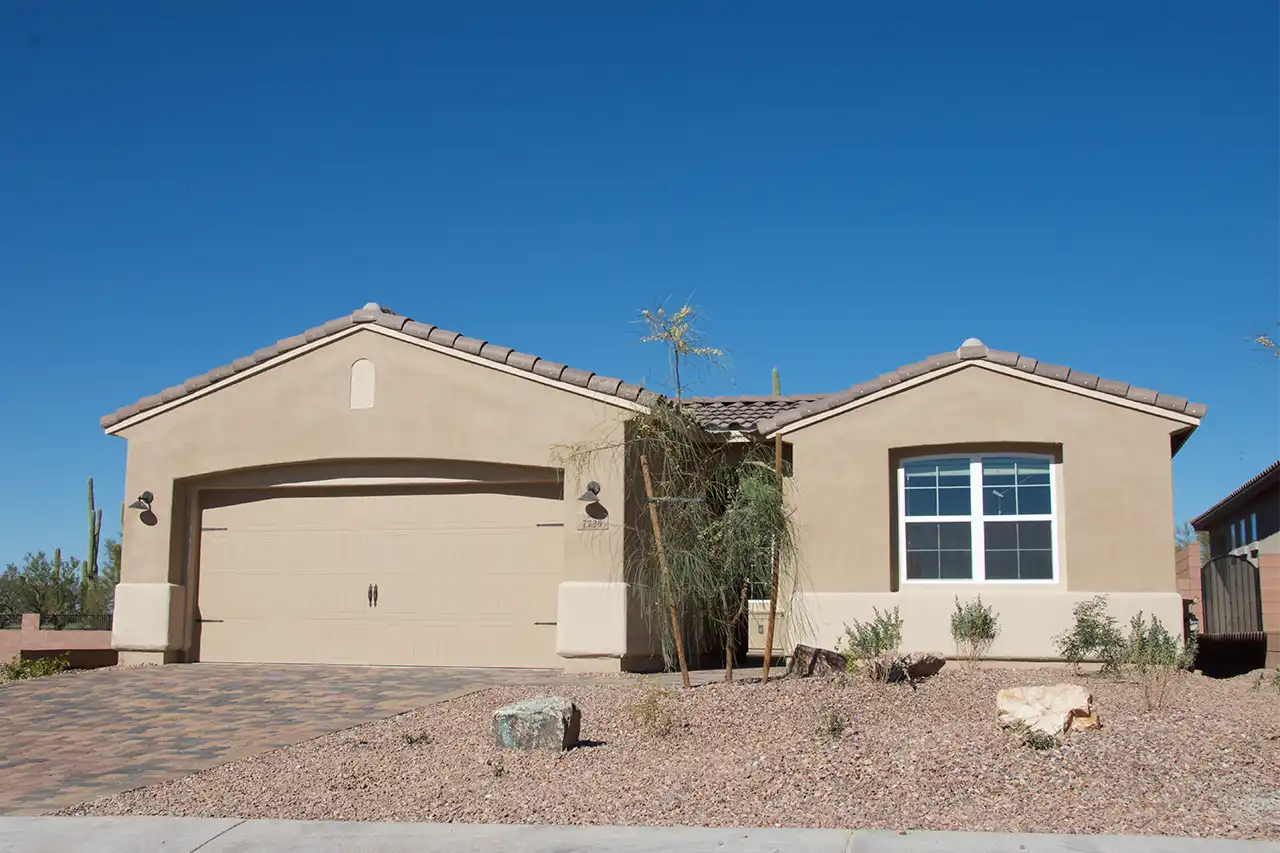
If you purchased a newly built home in Arizona over the past few years, your builder may have offered a lower mortgage rate or a temporary payment incentive to help make the purchase more affordable.
Those incentives helped many buyers get into their homes. But some homeowners are now reaching the point where their temporary rate buydown ends and their monthly mortgage payment increases.
If you’re in that situation, you may be wondering whether refinancing could help.
The answer depends on your current mortgage, your financial situation, and the rates available today. There are also some refinance programs from Fannie Mae and Freddie Mac that homeowners may not know about.
Before assuming you have to live with the higher payment, it’s worth understanding how your original financing works and what options you may have.



When builders wanted to make new homes more attractive to buyers, many offered mortgage incentives as part of the purchase.
One common incentive was a temporary interest rate buydown, such as a 2-1 buydown.
With a 2-1 buydown, the builder or another party typically contributes money upfront to temporarily reduce your mortgage payment during the first two years.
For example, suppose you purchased a home with a 30-year fixed mortgage at a 7% note rate.
Your payment might follow this schedule:
| Loan period | Effective payment rate |
| First year | 5% |
| Second year | 6% |
| Third year and beyond | 7% |
These percentages illustrate the temporary payment subsidy, not changes to the mortgage’s actual note rate.
The important distinction is that your mortgage rate may not have changed at all.
You may have had a 7% fixed-rate mortgage from the beginning. The builder’s incentive simply helped cover part of your payment during the first two years.
Once that assistance ends, you become responsible for the full payment based on the original mortgage terms.
That’s why some homeowners experience what feels like a rate increase even though they have a fixed-rate loan.
Possibly. But the fact that your temporary buydown is ending doesn’t automatically mean refinancing will lower your payment.
When someone contacts me about refinancing, I like to start with a few basic questions.
What is the actual interest rate on your current mortgage? How much do you still owe? What is your home worth today? And what are you trying to accomplish with the refinance?
For someone coming out of a builder buydown, I also want to understand when the temporary payment assistance ends and what the full payment will be.
We can then compare the existing mortgage against the options available today.
Sometimes refinancing makes sense. Other times, the available rates or costs don’t justify replacing the current loan.
The goal isn’t simply to refinance because your payment is increasing. It’s to determine whether a new mortgage would actually improve your situation.
Fannie Mae and Freddie Mac each offer a refinance option designed to help certain lower- to moderate-income homeowners replace an existing conventional mortgage with a more affordable fixed-rate loan.
Fannie Mae calls its program RefiNow. Freddie Mac calls its program Refi Possible.
These programs share several features, including more flexible debt-to-income requirements and provisions intended to reduce some refinancing costs.
They may be worth reviewing if you’ve assumed refinancing isn’t possible because of your income, debt obligations, or other qualification concerns.
However, not every homeowner qualifies, and neither program guarantees that refinancing will make sense.
RefiNow is available to eligible homeowners whose existing conventional mortgage is owned by Fannie Mae.
The program includes requirements involving income, payment history, property type, and the existing mortgage.
It also requires the new loan to provide a measurable benefit. Generally, the refinance must reduce the interest rate by at least half a percentage point and lower the borrower’s monthly principal-and-interest payment.
For qualifying borrowers, the program allows a debt-to-income ratio of up to 65%, which may provide more flexibility than some traditional refinancing options.
Fannie Mae also offers certain appraisal-related cost provisions that may help reduce upfront expenses.
Freddie Mac offers a similar program called Refi Possible.
It serves eligible homeowners whose existing conventional mortgage is owned by Freddie Mac.
Like RefiNow, the program focuses on borrowers within specific income limits and requires the refinance to lower both the interest rate and monthly principal-and-interest payment.
It also provides qualifying flexibility, including a maximum debt-to-income ratio of 65%, along with certain appraisal-related benefits.
The two programs are similar, but they operate under their respective agencies’ requirements.
You don’t choose between RefiNow and Refi Possible based on which program sounds better. The agency that owns your current mortgage helps determine which option may apply.
Both programs have specific eligibility requirements.
Generally, they focus on homeowners who meet conditions such as:
Both programs offer fixed-rate refinancing, and their terms restrict cash-out proceeds.
These are general program features, not a complete qualification checklist. Other underwriting, property, and loan requirements still apply.
One important point is that the income limit depends on the property’s location. A homeowner in Tempe may have a different applicable area median income than someone buying in another Arizona community.
We need to review the specific property and borrower’s qualifying income rather than assuming eligibility based on a statewide number.
This is something many homeowners don’t know, and that’s understandable.
The company that sends your mortgage statement or collects your monthly payment isn’t necessarily the company that owns your mortgage.
Fortunately, both agencies provide online tools that let homeowners check whether their loan appears in the agency’s records.
You can start here:
If your mortgage belongs to one of these agencies, that gives us a starting point for determining whether its refinance program may apply.
If neither agency owns your loan, that doesn’t necessarily mean you have no refinancing options. It simply means these particular programs may not fit your current mortgage.
This is where I want homeowners to have realistic expectations.
Suppose you purchased your home with a 7% fixed-rate mortgage and a temporary 2-1 buydown.
During the first year, your payment reflected a 5% effective rate. During the second year, it reflected 6%. When the subsidy ends, you begin making the full payment based on the 7% note rate.
For RefiNow or Refi Possible, we generally need to see an interest rate reduction of at least half a percentage point, along with the required monthly payment reduction.
That means the comparison starts with your actual 7% mortgage note rate, not the temporary 5% or 6% payment rate.
If the available refinance rate doesn’t meet the program’s requirements, we can’t use one of these programs simply because your builder incentive is ending.
And even if the new rate qualifies, we still need to look at closing costs, your remaining loan balance, and how long you expect to keep the mortgage.
Sometimes the better approach is to understand your eligibility now and revisit the numbers when market conditions change.
Not every homeowner who purchased new construction has a conventional mortgage.
If you financed your home with an FHA or VA loan, different refinancing programs may apply.
FHA offers a Streamline Refinance option for eligible homeowners with existing FHA-insured mortgages.
VA offers the Interest Rate Reduction Refinance Loan, commonly called an IRRRL, for eligible borrowers refinancing an existing VA-backed home loan.
These programs have their own requirements and potential benefits. They don’t use the same eligibility rules as Fannie Mae’s RefiNow or Freddie Mac’s Refi Possible.
The important first step is identifying the type of mortgage you currently have.
That helps us determine which refinancing options deserve a closer look.
When homeowners ask whether they should refinance, the conversation often starts with interest rates.
That’s understandable, but I don’t want you to focus on the rate and overlook the rest of the mortgage.
A lower interest rate doesn’t automatically mean a refinance is the right financial decision.
We also need to look at the closing costs, remaining balance, new loan term, and what happens to your monthly payment.
For example, if you’ve already made several years of payments on a 30-year mortgage, refinancing into another 30-year loan changes your repayment timeline.
Your monthly payment may decrease, but extending the loan term could increase the total interest you pay over time.
We should compare the actual numbers before deciding whether the new loan provides enough benefit to justify the costs.
If you know your temporary payment assistance will end within the next several months, I wouldn’t wait until the higher payment arrives to start reviewing your options.
Start by checking your mortgage documents or contacting your loan servicer to confirm your actual note rate and when the temporary subsidy ends.
Then review your expected payment once the incentive expires.
You should also determine whether you have a conventional, FHA, or VA mortgage and whether Fannie Mae or Freddie Mac owns the loan if it’s conventional.
From there, we can evaluate your current loan balance, estimated home value, income, and other financial information.
Even if refinancing doesn’t make sense today, understanding your situation gives you a better starting point if rates change.
It also gives you time to plan for the higher payment rather than being surprised when the temporary assistance ends.
If you purchased a newly built home in Arizona with a builder-paid mortgage incentive, you may be approaching the end of that temporary assistance.
That doesn’t necessarily mean your mortgage has changed. But it may mean your monthly payment is about to increase.
Fannie Mae’s RefiNow and Freddie Mac’s Refi Possible programs may offer refinancing opportunities for certain qualifying homeowners. FHA and VA borrowers may have other options worth reviewing.
The right approach depends on your existing mortgage, your financial situation, and whether a new loan would provide a meaningful benefit.
I recommend reviewing those details before making a decision.
If your builder buydown is ending, we can look at your current mortgage, discuss the available refinancing options, and determine whether it makes sense to act now or revisit the numbers later.

Justin Toenjes (ten-yes) is a highly accomplished finance professional with a strong background in mortgage banking and a passion for helping individuals achieve their financial goals.
Join 900+ Subscribers and updated on the newest posts by Toenjes Home Loans.






Loan Officer – Justin Toenjes – LO Licensing: AZ-LO-0912116, CO-100032832 | NMLS-167048 | NMLS-6274
LO Licensing: Kathi Alosi, AZ-LO-0914249 NMLS-259189
Peoples Mortgage – 11201 N Tatum Blvd, Suite 140, Phoenix, AZ 85028
Company Licensing: Peoples Mortgage Company, A DBA of Moria Development, Inc. AZ-BK-0904164, CO – Regulated by the Division of Real Estate | NMLS-6274 www.peoplesmortgage.com/privacy-policy – Regulated by the Division of Real Estate peoplesmortgage.com/license NMLS-6274 (Equal Housing Lender)
Peoples Mortgage: 2055 E Centennial Circle – Tempe, AZ 85284
By clicking “Accept All Cookies”, you agree to the storing of cookies in your browser to enhance site navigation, analyze site usage, and provide our ad partners with information for ad personalization and measurement. Please see our ‘Privacy Policy‘ for more information.